“Never think that war, no matter how necessary, nor how justified, is not a crime.”
– Ernest Hemmingway
Our first full day in Auckland we visited the Auckland War memorial Museum. As someone who takes a special interest in history there are two things that I will always try to hit depending on availability are Cathedrals and Museums. War is something that’s always fascinated me and it’s something that I’ve always held a fairly decent sized section of my brain thanks to my dad. I was thrilled to find that this museum existed and it was only a 4 minute drive from our hotel!
New Zealand being a small nation, has never crossed my mind when I’ve considered all the wars that have been fought in the 19th and 20th century. Which I must admit is a little embarrassing as New Zealand was a colony much the same as Canada was. So Britain’s wars were our wars. In that same thought, I suppose you could argue that being such a small place, the impact of these wars would have hit harder in New Zealand. Not to downplay the impact to any country or person that war will have.

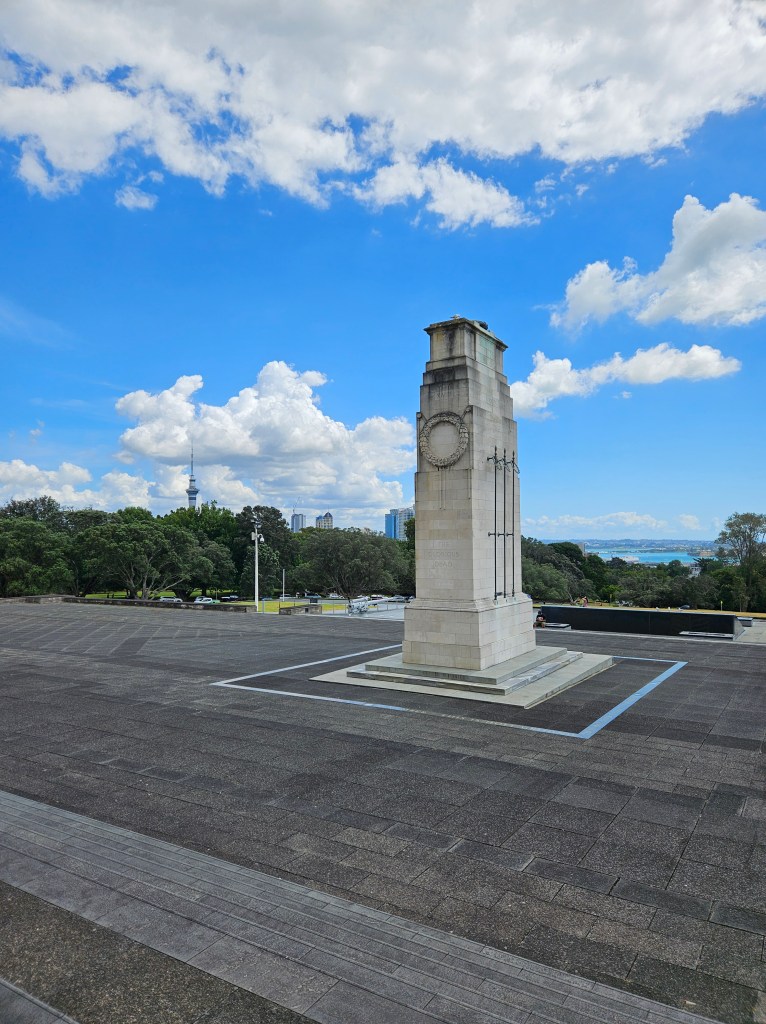
This museum houses much more than just war memorabilia. It’s home to various natural history items, Asian history items, and an impressive collection of Pacific Islanders and Māori historical items. The history of the museum goes back to the 1920’s. The museum itself was erected in 1929 after some funding had been raised and the Auckland museum was able to move from a smaller location to this one. The goal with the design was to combine the museum itself with the ability to honour those that were lost during WWI. The building is grandiose, and approaching it by ascending the hill, known to the Māori as Pukekawa (The Hill of Bitter Memories), is an experience that will humble just about anyone. There are large brass doors for the entrance are surrounded by columns that are almost an exact replica of the ones in Greece at the Parthenon. It sits behind the cenotaph and consecrated ground that were originally erected in 1922 to copy the Sir Edwin Luytens creation in London to recognize peace day in 1919.

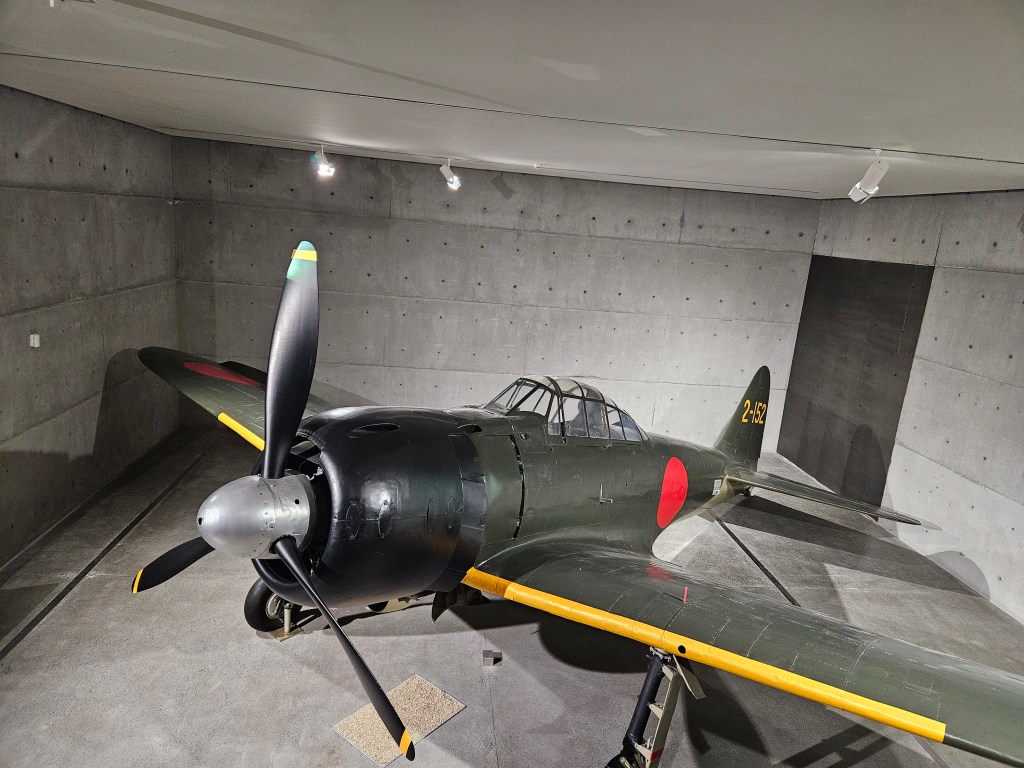
This Museum greatly exceeded my expectations. It was modern (After some fixing up in the 90’s), clean, well organized, well lit, clean, and had so much information about so many various parts of New Zealand’s history. The highlight in my opinion would be the Spitfire and the Zero that they have housed on either side of the museum. I’ve never had the chance to see either in real life and it was such a cool experience to see what both sides of the Pacific theater where fighting each other in.
The curators have done an excellent job at displaying all artifacts from different time periods in the history of the island while maintaining that this is indeed, a war memorial as well. There are plenty of somber exhibit’s too. They have an exhibit that is dedicated to the personal side of Hitlers final solution. These are first hand accounts from people who had gone through the Ghetto’s and the concentration camps. They survived and made their was to New Zealand to tell their story. They shared horrific conditions and treatment that they had to endure as well as the very personal tales of loss that they experienced at the hands of the Nazis. Their propaganda and acceptance of hate and prejudice allowed for the systematic slaughter of 6 million people or more. This is a lesson that many people need to learn. Once you dehumanize someone through lies, prejudice, and the acceptance of casting them out of normal society, it allows the general public to accept some truly despicable things. Some will even start to participate.
The entire top floor is a memorial to the lives that were lost in every war that New Zealand has fought in. All the way up to recent conflicts. The air and the mood on the top floor is much more toned down than the previous 3 floors. Everyone was quiet walking through the bright marble hallways that had the names of the soldiers that didn’t get lucky enough to come home. This was a very powerful and moving statement that really brings home the true human cost to war.
As interesting as war history is, that exactly what it should be. History. “Two heads are better than one”. We will accomplish much more as a species if we could only figure out how to work together and meet in the middle. Maybe the change has to start with each of us. We need to stop accepting the things that are becoming acceptable. We need to continue to work towards a brighter future where these stories and items will only ever be found in a museum, and not on the evening news channels.

 My Avocado Toasts
Leave a comment